Print
Print Email
Email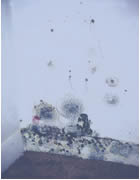
A water leak or high humidity can lead to mold, mildew, or other biological growth. Depending on the severity, conditions can lead to rot, structural damage, premature paint failure, and a variety of health problems. Water can seep into your house from the outside through a leak in your roof, foundation, or small gaps around windows or doors. Water can also come from inside your house from a leaking water pipe, toilet, shower or bathtub. High indoor humidity caused by normal activities of everyday living such as showering, cooking, and drying clothes, can also be a source of mold, mildew or musty odors. Indoor humidity levels between 30% and 50% are ideal. For more information consult EPA's Brief Guide to Mold in your home.
Prescription Checklist - The Mold Mildew Test:
Where does the problem occur? Attic? Basement? Below a bathroom? Ceiling? Where the problem occurs can lead to what is causing the problem. If the problem is localized (a spot on the ceiling, wall or corner) it is possibly caused by a water leak. Do you have mold mildew cleaner? If the problem is in a large area like a whole wall, room or basement then it might be caused by high humidity.
Stop water leaks immediately to minimize the potential mold mildew carpet growth:
- If a leak is the source of your problem, have it fixed first.
- If the leak is in your roof hire a roofing contractor to repair the leak.
- If the leak is from a water pipe, toilet, bathtub or shower, hire a plumber to repair the leak.
- If the leak has caused substantial water damage or mold you will want to hire a contractor who specializes in mold remediation and water damage repairs.
- After repairing the water leak, dry out the area completely.
Reducing indoor humidity:
- Do you have a crawlspace under your house? A dirt floor in a crawlspace should be covered with plastic (vapor barrier) to prevent moisture from the soil increasing humidity levels in your home. If there is standing water or the soil is wet, dry it out with fans before covering the floor.
- Use ventilation fans in kitchens and baths to control moisture. Check to make sure ventilation fans venting directly outside. In some cases the vent fan may have been installed to vent into the attic or become disconnected or blocked.
- Your clothes dryer should be vented directly to the outside. Inspect the vent duct. Make sure it is attached securely to the dryer. Check that it is clear of obstructions (e.g. lint). Check for holes that leak air. If vent duct is damaged replace it with a metal duct. The vent duct should be cleaned at least once a year. Also see, the Consumer Products Safety Commission additional safety tips for dryer vents.
- Keep air conditioning drip pans clean and the drain lines unobstructed and flowing properly.
- Ask a heating and cooling contractor to check your heating and cooling system to make sure it is sized and operating properly to remove humidity. If you system is too big or the airflow incorrect your air conditioner will not remove humidity like it should. Also, ask the contractor to check your duct system for air leaks, and proper size and air flow to each room.
- Sealing air leaks (Home Sealing) and sealing duct air leaks can help to prevent high humidity levels in your home.