Print
Print Email
Email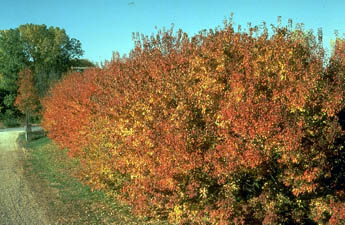
Properly selected and placed landscaping can provide excellent wind protection, or windbreaks, which will reduce heating costs considerably. Furthermore, the benefits from these windbreaks will increase as the trees and shrubs mature.
Landscape Strategies
To use a windbreak effectively, you need to know what landscape strategies will work best in your regional climate and your microclimate
Wind Chill Effects
Basically, a windbreak can lower the wind chill near your home. Wind chill occurs when wind speed lowers the outside temperature. For example, if the outside temperature is 10F (-12C) and the wind speed is 20 miles per hour (32 kilometers per hour), the wind chill is -24F (-31C). A windbreak will reduce wind speed for a distance of as much as 30 times the windbreak's height. But for maximum protection, plant your windbreak at a distance from your home of two to five times the mature height of the trees.
Blocking Wind
The best windbreaks block wind close to the ground by using trees and shrubs that have low crowns. Dense evergreen trees and shrubs planted to the north and northwest of the home are the most common type of windbreak. Trees, bushes, and shrubs are often planted together to block or impede wind from ground level to the treetops. Evergreen trees combined with a wall, fence, or earth berm (natural or man-made walls or raised areas of soil) can deflect or lift the wind over the home. Be careful not to plant evergreens too close to your home's south side if you are counting on warmth from the winter sun.
Dealing with Snow Drifts
If snow tends to drift in your area, plant low shrubs on the windward side of your windbreak. The shrubs will trap snow before it blows next to your home.
Insulation Effect from Windbreaks
In addition to more distant windbreaks, planting shrubs, bushes, and vines next to your house creates dead air spaces that insulate your home in both winter and summer. Plant so there will be at least 1 foot (30 centimeters) of space between full-grown plants and your home's wall.
Summer Winds
Summer winds, especially at night, can have a cooling effect if used for home ventilation. However, if winds are hot and your home is air conditioned all summer, you may want to keep summer winds from circulating near your home.